What's New
Introducing the Gallery: The Portfolio That Gets Visual Artists Hired by Bands
By the Bandry Team · August 5, 2026 · 7 min read
Every record you love was made by more people than the band. Somebody shot the press photos. Somebody drew the cover. Somebody framed the video that made you click it, and somebody lit the room so the whole thing looked like something. None of that happens by itself, and none of it happens for free.
So here is the strange part. When a band needs a photographer, they ask around until somebody remembers a name. And when a photographer needs work, they post to a feed full of other photographers. Two rooms that need each other, and almost no door between them.
Today that door is open. The Gallery is live in Bandry 1.2, on iPhone, iPad, and the web.
The problem was never your work. It was the room.
Think about where your portfolio actually lives right now. Behance is other designers. Dribbble is other designers. Your Instagram grid is mostly other photographers plus people who liked one shot in 2023. Your portfolio site is a link you paste into emails and hope somebody opens.
Every one of those rooms is full of your peers. Wonderful for feedback, useless for getting paid. The people who actually commission music visuals, the band tracking their first EP, the artist who just got a release date, the promoter who needs a poster by Friday, are not scrolling design portfolios. They are asking their group chat.
Bandry is already where they ask. It is a bulletin board of musicians and music pros stating what they need, right now, in their own city. The Gallery puts your work on that same board.
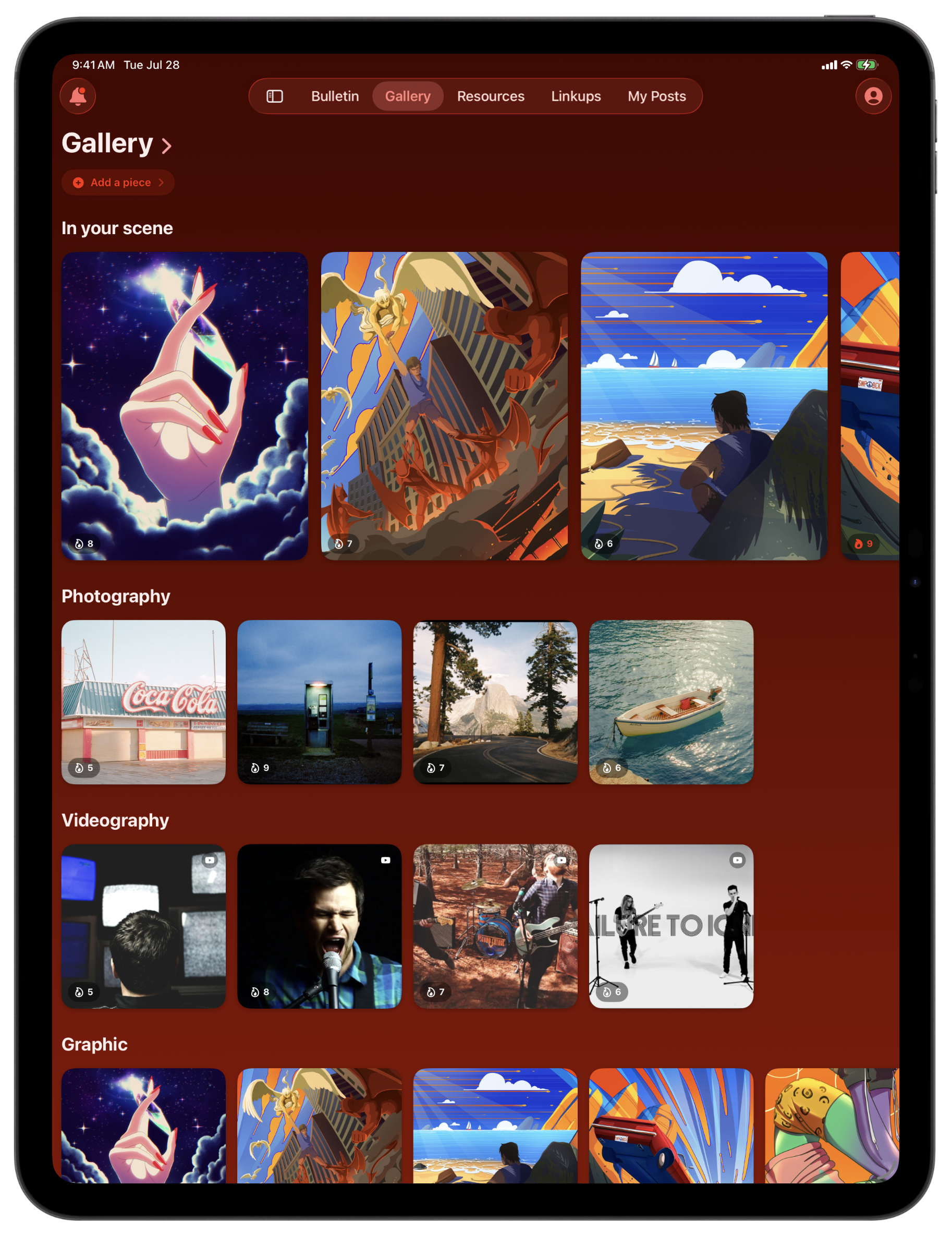
Every piece is a hire button
This is the part that makes the Gallery different from a portfolio site, and it was the first thing locked in when we designed it.
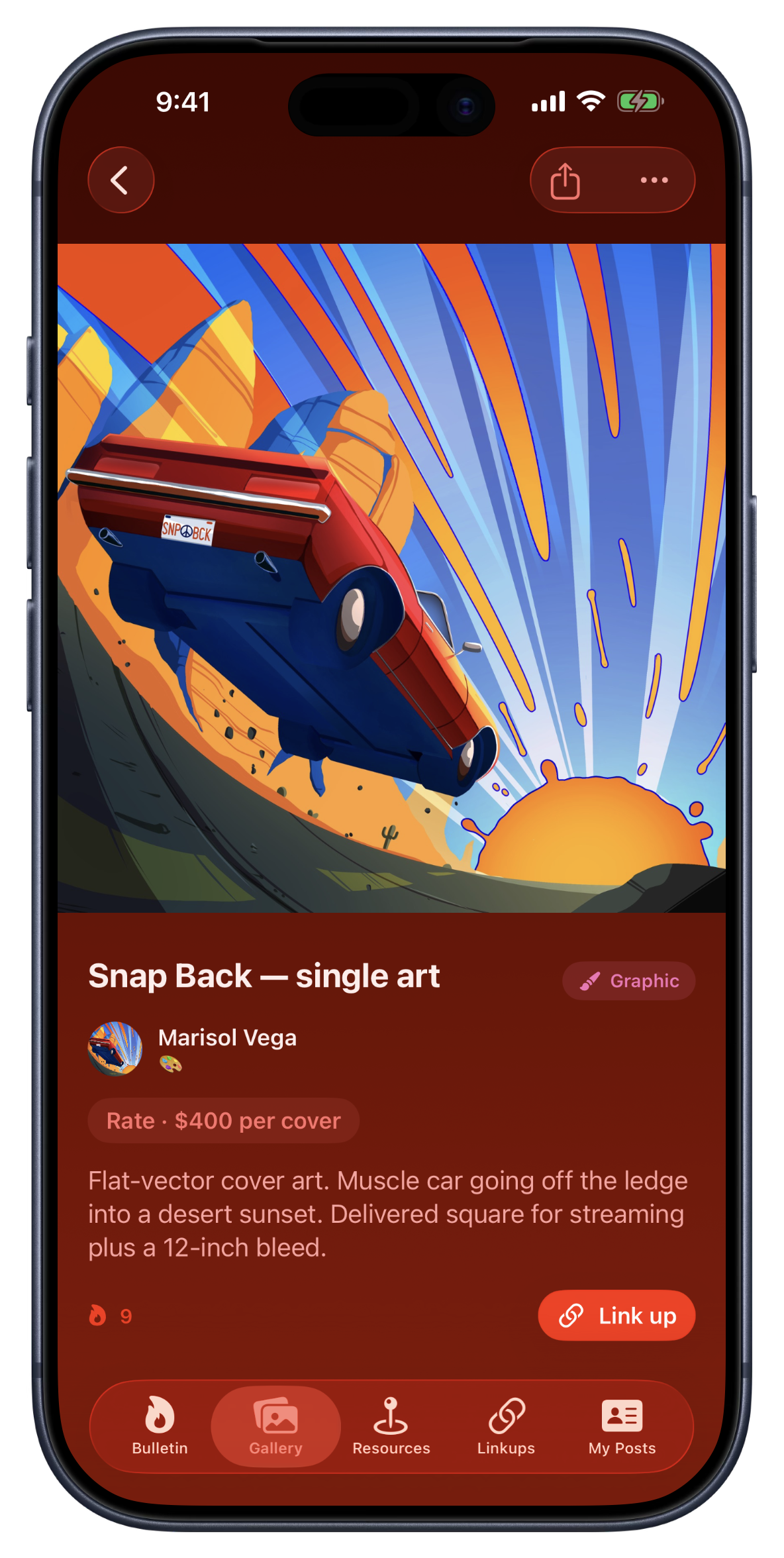
On a normal portfolio, someone loves a photo and then has to go find your contact page, or your DMs, or your email, and write an opener from scratch. Most of them do not. On Bandry, the piece itself is the point of contact. Every single one carries the link button that runs the whole app. Someone sees work they want, taps it once, and your contact info lands with you so you can pick up the conversation.
No separate post explaining that you are available. No DM thread that dies on read. No platform sitting in the middle of the job taking a percentage. The work is the pitch and the tap is the message.
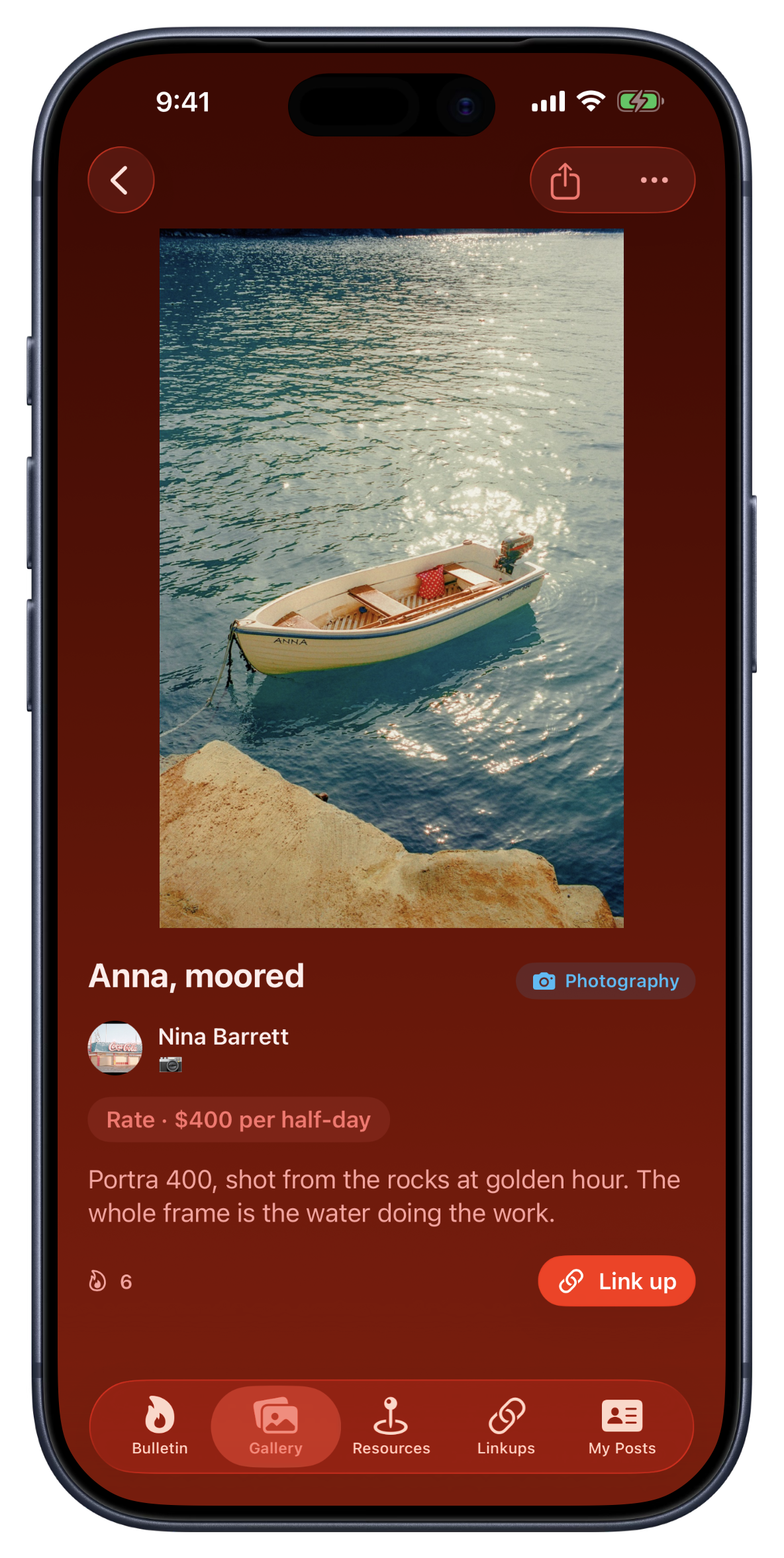
Your rate goes on the work
You can put a price on any piece. Four hundred a half-day for photos. Four hundred a cover. Whatever the number is, it sits on the work where people see it before they reach out.
Everyone who has freelanced knows why that matters. The worst part of the job is never the job, it is the three messages of throat-clearing before you find out they had two hundred dollars and a dream. Putting the number up front filters that out completely. The people who tap the link button already know what you charge and are fine with it, so the conversation starts at scheduling instead of negotiating.
Rates are per piece, because a half-day of photos and a full music video are not the same job. And if you would rather talk it through, leave the rate off entirely.
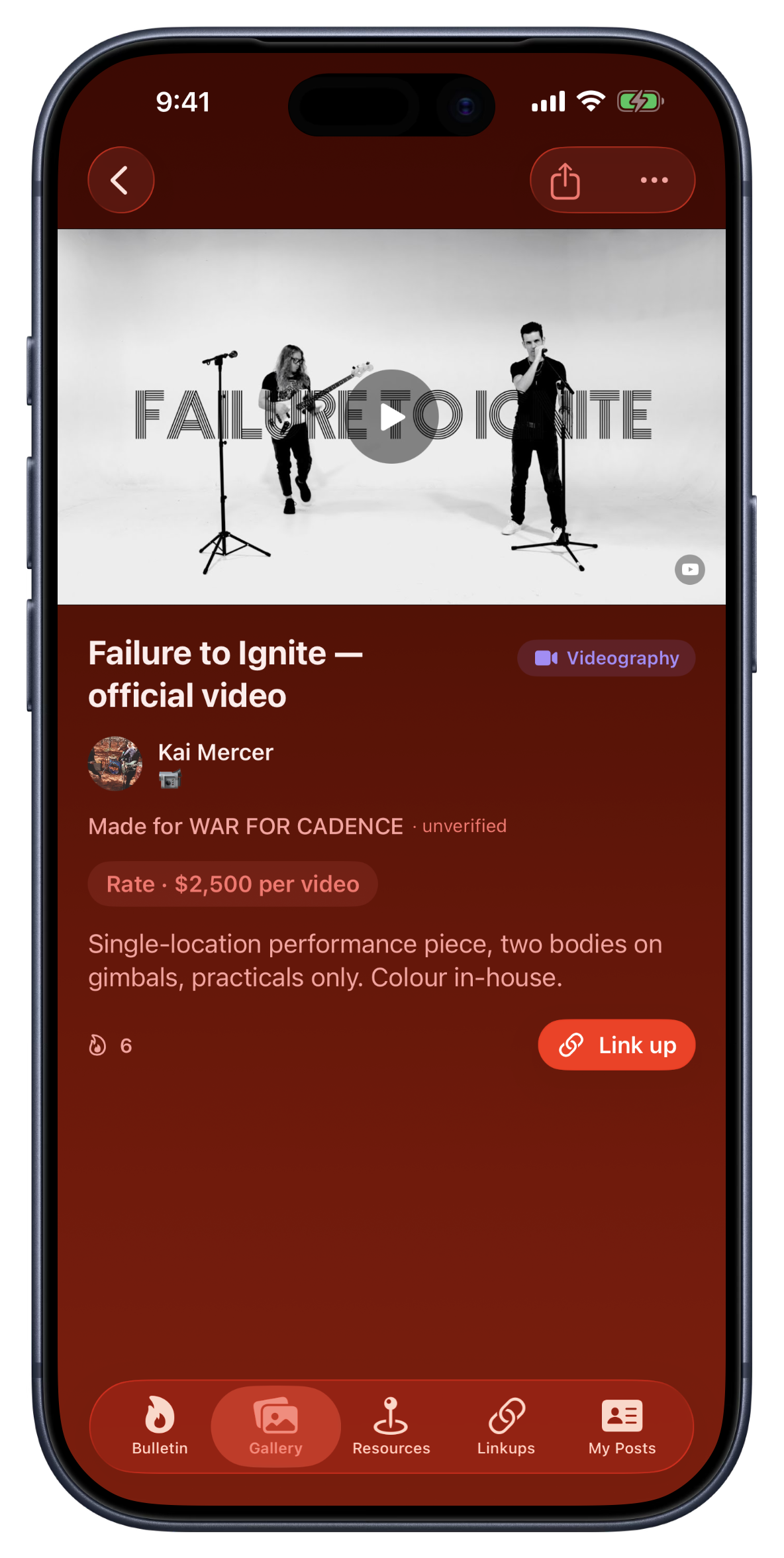
That is a video piece, and it shows the other half of how this works. The video itself never gets uploaded to Bandry. You paste the link, the cover pulls in on its own, and every play still happens on your channel where it counts for you. The line under the title is a credit to a client who is not a Bandry member, so it says so, rather than passing itself off as confirmed.
Credits that are receipts, not claims
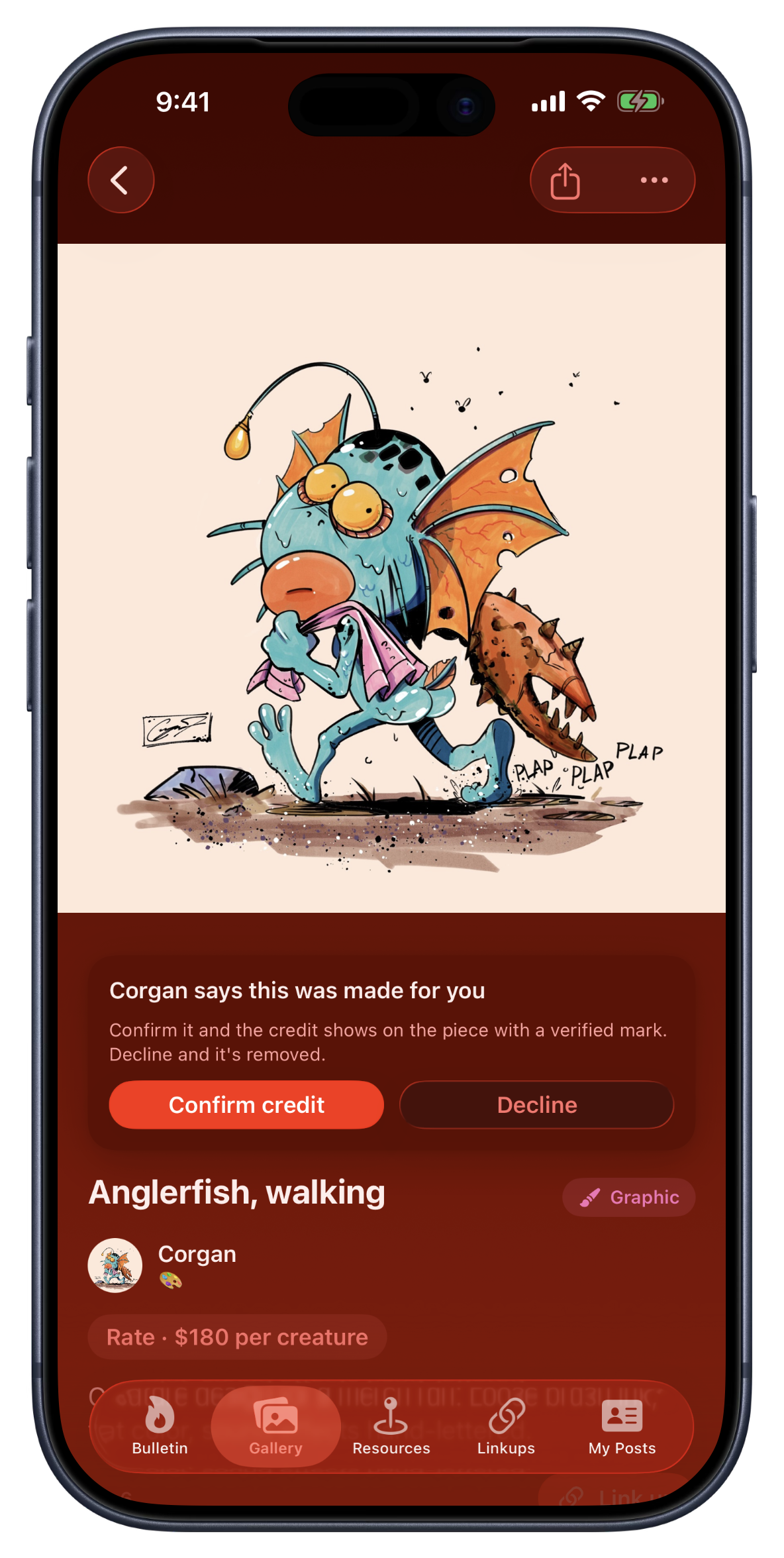
Anyone can say they shot a band. On Bandry, a credit has to be confirmed by the person it names.
When you put a piece up, you can tag the member you made it for. They get a notification asking them to confirm, and only when they say yes does the piece wear the credit. Nobody can stamp a confirmed credit onto their own work, so when a band sees one, it means exactly what it says: this artist did this job for this person, and that person backed it up.
Work for someone who is not on Bandry? Type their name and it still shows, marked unverified, which is the honest version rather than a claim dressed up as proof. And if you miss a confirmation request, it waits for you under the bell at the top of the Gallery instead of vanishing into a notification list.
Every walk of visual artist
Five disciplines, because music does not run on one kind of visual.
Photographers. Press shots, live work, band portraits, product and gear. Put up the frames that sell the job with your day rate attached, and stop retyping the same quote email. Bands need photos at the exact moment they get a release date, which is exactly when they are on Bandry looking for everything else.
Videographers. Post a link to the video on YouTube, Vimeo, or wherever it lives, and the cover art pulls in on its own. Plays stay on your channel and count for you, because Bandry hosts nothing. Your reel becomes a hireable object instead of a link in a bio.
Motion designers. Lyric videos, visualizers, tour loops, the animated single art that every release needs now and almost nobody plans for. This is the work bands scramble for a week before release day. Being findable at that moment is the whole game.
Graphic and cover artists. Cover art, single art, logos, posters, merch. An album cover is the single most looked-at image an artist will ever put out, and it is usually commissioned in a panic. Six pieces of your best, sitting in front of the people commissioning it.
Lighting designers. The most invisible craft in music and the one that decides whether a live photo is worth taking. Show the rooms you have lit, tag the acts who will confirm it, and get found by bands who are tired of playing under a white wash.
Six pieces, and nothing expires
Posts on Bandry's other boards run out after 30 days, on purpose, because a need goes stale. A portfolio does not work that way, so Gallery pieces never expire. They stay up until you take one down or swap it for something better.
Six is the cap, and it is the good kind of constraint. Nobody hires from a hundred-image dump, they hire from the six that made them stop scrolling. It also means one prolific artist cannot bury a whole scene under their output, which keeps the wall worth looking at.
Your scene first, never walled off
The top shelf is In your scene, which puts artists within about 100 miles first. That exists for one reason: a photographer has to physically get to the shoot, and a lighting designer has to physically get to the room.
But it is a shelf, not a wall. Every piece stays visible everywhere, because a cover artist in Tulsa can absolutely draw for a band in Chicago. Local where local matters, global where it does not, which is the same rule that runs the rest of the app.
Putting your first piece up
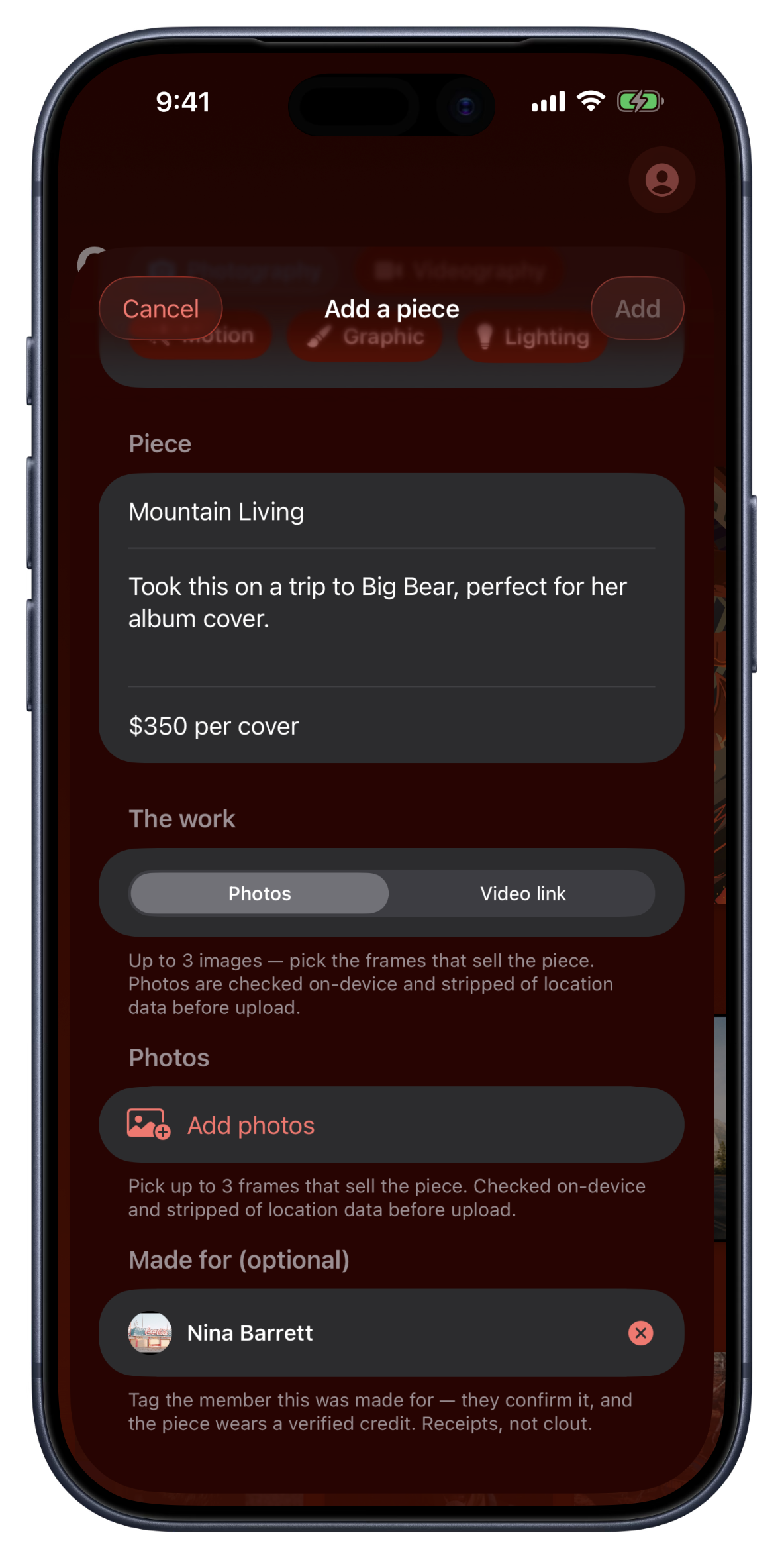
Open Bandry, go to the Showcase tab, and tap the title twice. Showcase flips to Mixtapes, then to Gallery. Tap Add a piece.
Give it a name, add a short note about the work if you want one, set your rate, and pick up to three images or paste a video link. Photos are checked on your device and stripped of their location data before they ever upload, so a shoot address never rides along in a file. Tag who it was made for if it was made for somebody. That is the whole thing.
Tap any piece on the wall and it opens full screen, at its real shape, never cropped into a square. Pinch to zoom in on the grain. Swipe between the frames. Your work gets shown the way you made it, which sounds obvious until you remember what every other feed does to it.
Also in this update
Resources now follows you. If you are 200 miles from home, the map shows the studios, rehearsal rooms, and repair shops around you instead of the ones around your house. Set your location by hand and it still holds when your phone cannot get a fix, which is what that setting was for in the first place.
Bandry is also now 16 and up across the board, in the app and in our terms. People trade real phone numbers here and meet in real rooms, so that floor is the right one.
If you make the visuals, this is your board
You have spent long enough marketing to other artists who do what you do. The Gallery is a room full of people who need exactly what you make, at the exact moment they need it, and it is included in the same subscription as everything else in Bandry. No portfolio hosting bill, no per-submission fee, no cut of your work.
Put up six pieces. Put your rate on them. Let the work do the reaching out.
Frequently asked questions
Who is the Gallery for?
Anyone who makes the visual side of music: photographers, videographers, motion designers, graphic and cover artists, and lighting designers. If a band would pay you for what you make, your work belongs on it. You do not need to be a musician to be on Bandry.
How do people hire me from a piece?
Every piece carries the link button, the same one that sits on every post in Bandry. Someone sees work they want and taps it, and your contact info goes straight to you so you can take it from there. There is no separate posting step, no DMs to babysit, and no middleman taking a cut of the job.
How many pieces can I put up, and do they expire?
Six at a time, and they never expire. Posts on the other Bandry boards run out after 30 days because a need goes stale. A portfolio does not, so Gallery pieces stay up until you take them down or swap one out.
What is a made-for credit?
When you upload a piece you can tag the Bandry member you made it for. They get asked to confirm it, and only when they say yes does the piece wear the credit. Nobody can put a confirmed credit on their own work, so a credit on Bandry means what it says. If the client is not on Bandry you can still type their name, and it shows as an unverified line, which is the honest version.
Do I have to show a price?
No, the rate is optional. Most artists find it saves them a round of messages, because the people who reach out already know the number and are fine with it. You can put a different rate on every piece, since a half-day of photos and a full video are not the same job.
Does my work only show to people near me?
No. In your scene is a shelf that puts artists within about 100 miles at the top, so a band can find someone who can physically make it to the shoot. It is never a wall. Every piece stays visible everywhere, because a cover artist can work with a band in any city.
What does the Gallery cost?
Nothing beyond your Bandry subscription, and there is a 14-day free trial of everything. Browsing the Gallery and backing work with the fire button are always free. Putting your own pieces up and linking up with people are what the subscription covers, the same as every other board.